Meet the SOLO IFAK: Compact. Capable. Ready.
- PTP Team
- Nov 12, 2025
- 4 min read
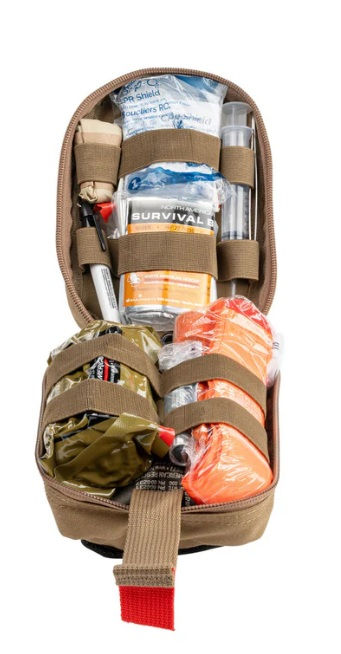
When you’re serious about personal safety and preparedness, medical readiness isn’t an optional extra; it’s integral. The SOLO IFAK is built around that principle: it’s not your typical first-aid kit for band-aids and minor cuts, it’s a trauma-response kit designed with real-world injuries in mind. Whether you’re prepping for vehicle incidents, violent encounters, wilderness mishaps, or everyday carry scenarios, this kit delivers professional-grade capability in a compact, highly portable form factor.
Designed for Immediate Access & Real-World Threats
One of the standout attributes of the SOLO IFAK is how it balances size with readiness. It’s compact enough to fit into a pack, tactical pouch, vehicle console, or even a large jacket pocket, yet its contents are far beyond basic. The case is purpose-built; items are logically arranged for rapid deployment under stress. In a bleed-out scenario, speed and layout matter. The kit’s marketing emphasizes “combat-proven treatments” in an “ultra-compact emergency solution.” Its dimension and weight are optimized to go where you go: stealthy enough to carry, robust enough to perform.
What’s Inside: Trauma-Ready Contents
Think of this kit as bridging the gap between typical “first aid” and “serious trauma response.” Among the contents you’ll find:

Why It Matters for Self-Defense / Preparedness
In your work on self-defense, you emphasize that the fight doesn’t end with threat neutralization. What happens after the incident: injuries, trauma, and evacuation matters just as much. Here’s how this kit aligns with that philosophy:
Uncontrolled hemorrhage remains the #1 preventable cause of death in trauma. Having a tourniquet + hemostatic gauze means you are addressing the single largest risk.
Access matters: It doesn’t help that you have gear if you can’t reach it because of location, damage, or panic. The compact size and intelligent layout of the SOLO IFAK mean you’re more likely actually to deploy it when seconds count.
Mobility and placement: Whether in a vehicle, carried in a pack, or slung on a belt, this kit fits into mobile lifestyles; not just fixed home-stations. For someone who trains in “real world” scenarios (commute, car, field), that’s critical.
Integration with training: Owning it is one thing; using it is another. The kit’s contents are usable with standard bleeding-control and trauma-first-aid training.
Beyond the fight mindset: Self-defense is often thought of as physical techniques, awareness, and avoidance. But resilience includes medical aftermath, how you secure life, preserve function, and respond to injury. The SOLO IFAK embodies that broader readiness.
Use-Case Scenarios & Placement Suggestions
Here are examples of how one might deploy it in different contexts:
Vehicle deployment: Mounted in the driver compartment or center console, ready if you are injured in a crash or pinned in your seat. The compact size means it doesn’t take over the vehicle's gear space.
Everyday carry / urban complaint: Concealed in a backpack or briefcase, or clipped to a commuter belt. For someone going to and from work in potentially unpredictable environments, it’s a real upgrade from a generic first aid kit.
Outdoor or wilderness training/hunt: On a hunting trip, mountain bike outing, or remote worksite, this kit gives you trauma-capable gear without the burden of large bulk.
Home readiness backup: While many training manuals position medical kits as “in the closet”, the SOLO IFAK could serve as a mobile supplement; in the vehicle, by the door, or in a go-bag so you’re not limited to static locations.
Things to Remember / Limitations
No gear is perfect; even the best kit must be paired with training, inspection, and realistic expectations. Some considerations:
Training non-negotiable: The tourniquet is only helpful if you’ve practiced applying it under stress, one-handed if needed. Agility of response matters.
It’s not a full hospital pack: While comprehensive for single-patient trauma, it’s not designed for multiple casualties or prolonged field surgery. If you’re prepping for mass-casualty or extended field treatment, this should be augmented.
Maintenance & readiness: Supplies have shelf lives. Gauze, dressings, tourniquet integrity, pouch stitching, and closures all must be periodically checked. A kit that’s sitting unused still requires upkeep.
Placement must be deliberate and tested: Knowing where you carry it, how you access it (even if injured), how you open it fast; these are exercises as important as the gear. A kit tucked into a bag that you can’t open one-handed is a liability.
Integration with broader preparedness: While a strong kit, your self-defense framework must also include situational awareness, avoidance, evacuation plans, communication, and medical follow-up. The SOLO IFAK is one piece of a larger puzzle.

Final Thoughts
The SOLO IFAK is more than just another accessory for your gear shelf; it’s a logical extension of a serious self-defense posture. Compact, well-designed, capable: it takes medical readiness out of the “nice to have” category and puts it firmly into “must-have readiness”. When you adopt a mindset of preparedness, you don’t just plan for the fight; you plan for what happens afterward. Having the right tools, and more importantly, knowing how to use them, is your best insurance. In that context, the SOLO IFAK is an excellent choice.


Comments