Appendix Carry vs. Behind-the-Hip Carry: Finding the Best Concealed Carry Position for You


Carrying concealed isn’t just about owning the right firearm; it’s about how you carry it.
The right holster and position can determine your comfort, draw speed, concealment, and even safety. Among Inside-the-Waistband (IWB) carry methods, two positions dominate the conversation: Appendix Carry (AIWB) and Behind-the-Hip Carry (typically between 3 and 5 o’clock for right-handed shooters).
Each approach offers unique advantages depending on your body type, lifestyle, and training background. Let’s break down the strengths and trade-offs of both so you can choose the setup that fits your everyday carry (EDC) needs.
What Is Appendix Carry?
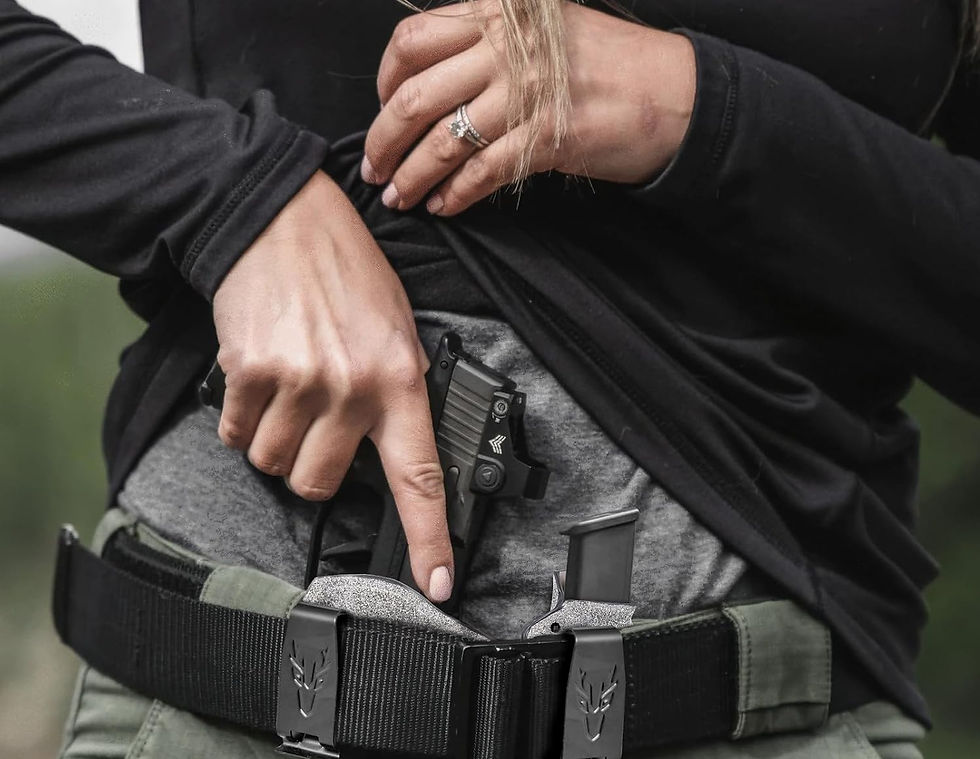
Appendix Inside-the-Waistband (AIWB) places your firearm in front of your body, usually between the 12 and 2 o’clock position for right-handed shooters, or 10 to 12 o’clock for left-handed shooters. This position has grown increasingly popular among concealed carriers for its blend of accessibility, control, and concealment.

Benefits of Appendix Carry
Faster Draw and Presentation
Appendix carry positions the gun closer to your centerline, allowing for a direct and efficient drawstroke. Because your hand travels a shorter distance to establish a grip, your firearm clears the holster and gets on target faster; a critical advantage in defensive encounters where seconds matter.
Enhanced Weapon Retention
With your firearm in front of you, it stays within your natural field of view and defensive reach. In close-quarters situations, this makes it easier to protect your weapon from a potential disarm attempt. You can also see the holster during reholstering, which adds an extra layer of safety and awareness.
Superior Concealment
AIWB leverages the natural contours of the abdomen, allowing the firearm to tuck in tightly and reduce printing; especially with a purpose-built holster featuring a claw or wedge. Many carriers find it conceals better under casual or professional clothing without needing oversized garments.
Comfort While Standing or Moving
Standing, walking, or running often feels more natural with an appendix holster since the firearm moves with your body’s centerline. Many modern AIWB holsters are designed with rounded edges and flexible wedges to improve comfort, even for all-day carry.
Challenges of Appendix Carry
Discomfort While Sitting: Some carriers, particularly those with larger midsections, find the position uncomfortable during long periods of sitting or driving.
Muzzle Awareness: Because the muzzle points downward near sensitive areas, strict trigger discipline and careful reholstering are essential for safety.
Despite these considerations, many experienced shooters find that a well-designed holster can mitigate most comfort and safety concerns.
What Is Behind-the-Hip Carry?
Behind-the-Hip Carry positions the firearm between roughly 3 and 5 o’clock for right-handed shooters (7 to 9 o’clock for left-handed shooters). It’s one of the most traditional concealed carry setups and remains popular for both IWB and OWB (Outside-the-Waistband) configurations.

Benefits of Behind-the-Hip Carry
Comfortable for Long Hours of Sitting
This position places the firearm away from your abdomen, which many find more comfortable while driving or sitting at a desk. It allows for less pressure on the stomach and a more relaxed waistband fit.
Familiar, Proven Draw
Many shooters train from strong-side holsters, making the transition to behind-the-hip carry natural. The draw motion mirrors traditional duty setups and can feel intuitive for those with prior training or range experience.
Muzzle Orientation & Safety
The muzzle typically points downward and slightly rearward, which alleviates concerns about self-muzzling during reholstering. For those prioritizing muzzle discipline, this orientation feels more comfortable and confidence-inspiring.
Challenges of Behind-the-Hip Carry
Slower Draw Time: The hand must travel farther to reach the firearm, and clothing can interfere more easily during the draw.
Reduced Retention: Because the gun is behind you, it’s harder to control or protect during physical encounters.
Increased Printing: When bending or reaching forward, the grip of the gun can protrude, making concealment trickier.
Less Visibility When Reholstering: Without direct line of sight, reholstering requires extra caution to avoid catching clothing or the trigger guard.
Which Carry Method Is Right for You?
Choose Appendix Carry if:
Speed and accessibility are top priorities.
You value strong retention and the ability to visually confirm reholstering.
You prefer a slimmer profile and maximum concealability.
Choose Behind-the-Hip Carry if:
You sit for extended periods or drive frequently.
You prefer a traditional draw motion that aligns with prior training.
You feel more comfortable with the muzzle pointed downward or rearward.
Final Thoughts
Both appendix and behind-the-hip carry have legitimate advantages, and neither is inherently “better.” The right choice depends on your body type, training, and daily routine.
Whatever position you choose, remember that holster quality and safe gun-handling habits are non-negotiable. Look for a well-made Kydex holster with solid retention, proper belt clips, and thoughtful contouring for comfort and concealment.
Finally, practice regularly. Experiment with both positions during dry-fire and range sessions. The best carry method is the one you can access quickly, control effectively, and wear comfortably, day in and day out.


Comments